Friday, 2 November 2007

Coldplay Biography


Just months after Coldplay released their #1 debut album, Parachutes, in England, they were hailed as Band of the Year 2000 in the music press. How did these four college friends become the poster children for a nation's emotions? It may have happened at the speed of light, but it wasn't as easy as it seems.

Coldplay secured a permanent position in Britain's music elite by writing beautiful, simple songs that gently pulled at the heartstrings of a nation. Somewhere in between the confident, vulnerable guitar playing of Jonny Buckland, the melodic bassline of Guy Berryman, thoughtful drumming of Will Champion, and lead Chris Martin's stark, tenor vocals are answers for the soul. Although melancholy stands behind every Coldplay song, each one is also steeped in an unusual and sincere optimism rarely found in English bands. Songs face an inevitable sadness and yearning - a little thing called being real - to get to a better place where the truth held firm in pure emotion is pivotal. Songs like the remorseful "Trouble," with its memorable piano-line, the lonely "Spies" and mega-hit single "Yellow" reveal a hybrid of lyrics that can only be described as joy and remorse, all wrapped into one. "We just want the songs to reflect reality," says Chris.

In doing so, Coldplay may well be the most profound British act to emerge out of the millennium thus far. No one is more surprised by their popularity than the band. Who knew such an austere and tactile musical existence would lead to such greatness? Yet it has.

It all began when the members of Coldplay met in 1996 - their first week of college (University College London). Two and a half years later, they had their first official band session - a rehearsal in Jonny's bedroom in January of 1998. Jonny and Chris had been working on songs since they met, but the other two members hadn't really been around much until Guy joined the band to play bass just before dropping out of engineering school. The other two stuck with their studies, while also pursuing music.

Will, also still in school, loved playing guitar but was persuaded to become Coldplay's drummer so the band could play their first gig (at a Cuban Caf?at a festival for unsigned bands called "In The City" in Manchester) in late 1998. They had just six songs written including "Don't Panic" and "High Speed" - now found on Parachutes. They soon released 500 copies of an EP called Safety (financed by their now manager, Phil) and released the single "Brothers And Sisters" on a small English label called Fierce Panda, after which the UK label Parlophone signed them in 1999 just before final exam time. As they say, the rest is history, or in the stars, or whatever. In any case, another EP on Parlophone, The Blue Room, followed, as did the single "Shiver."

Before the band, lead singer/guitarist/pianist Chris Martin grew up in a close family from Devon, England. In fact, he still lives at home as the eldest of five kids raised by a teacher mum and accountant dad, where he started bashing out tunes on the family piano at an early age. Typical of the first-born, he is an over-achiever and self-proclaimed worrier. Although anything to do with "injustice" will rile him up, no one can accuse him of being the typical tortured and drunken English musician since he rarely drinks, never smokes and admits life can be pretty damn good. He's a shy product of boarding school where he soon graduated to the guitar and has been in bands since the age of 15. He considers the big three in music to be: Bob Dylan, Neil Young and Tom Waits. Oh, and the Flaming Lips aren't bad either.

Lead guitarist Jonny Buckland doesn't think he's a very good guitar player, but the rest of the world begs to differ. He was born 22 odd years ago in London, then his family relocated to Mold, North Wales when he was just four. Jonny first picked up a guitar at the tender age of 11, encouraged by his older brother who was a huge My Bloody Valentine fan. Both boys grew up in a house filled with Eric Clapton and Jimi Hendrix from their dad's record collection. Yet it wasn't until Jonny discovered The Stone Roses that he started taking the guitar seriously. People describe him as shy and nonchalant, but he argues he's just happy to be quiet.

Bassist Guy Berryman was born in Scotland, although his family later moved to Kent, England where he started to collect rare groove and funk records when all the other kids were into indie rock. He started playing bass at age 13 and is still inspired by a love of those early records.
Words like "calm," "reliable" and "enthusiastic" are used to describe drummer Will Champion. He was born in Southampton, England to teacher parents who encouraged him to spend his formative years learning to play a variety of instruments including guitar, bass, piano and the tin whistle. He had never played drums before joining Coldplay but was so musically inclined that he quickly caught on. "He's very quiet and very wise," says Chris about Will. "As a musician, he's got the most amazing sense of melody. He can play just about anything ... and he can do little impressions. He's good at entertaining people."

When the band went into the studio early last year with co-producer and engineer Ken Nelson to record Parachutes, they agreed that nothing would go on the album that they all four didn't agreed on. This led to a fierce and gut wrenching recording session that the guys thought might be their last. Songs ended up veering from fragile to forceful, from understated to epic, all-the-while carried by Chris' gorgeous vocal range and endearingly bashful lyrics. On a bittersweet morning in May, the album was finished.


No one predicted that just a short time later, Parachutes would debut at #1 and continue to hover in the Top Ten Charts for the remainder of the year. The band was also nominated for an esteemed Mercury Music Prize, received the Q Award for Best Album, signed to an American label (Nettwerk America/Capitol) and were exhausted by year's end from endless promotional duties and touring. Having been tirelessly in the spotlight for months now, the members of Coldplay are reticent to talk about themselves - subscribing to the school of thought that "those who say less tend to be wiser." Yet what they have to say can be heard in the music, which speaks louder than any words spoken ever will.

Chris admits that the last track on the album, "Everything's Not Lost," is the message of Coldplay's entire work up until now. The song says that when things happen to you in life, your first inclination is to think everything's terrible, what's the point? Then you realize the point is simply that - that it's not that bad and you have to keep going. Finally, you come to realize that life is good. Look for Coldplay to embark on their first-ever American tour in the beginning of 2001.

Thursday, 18 October 2007

DJ Lucca

DJ Lucca began performing as a DJ in 1999, but the dance scene has interested her since she was 16, when she visited London. She began her career working for a promotions agency in the Boby Center, Brno, where the first Czech dance parties with Paul van Dyk and Nick Warren took place in the mid 1990s. In September 2004 Lucca created her own label - Acapulco

Dj tiesto power mix


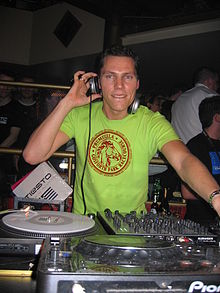
Tiësto /tiɛsto/ (born Tijs Verwest /tɛɪs vɛɹʋɛst/ on January 17, 1969 in Breda, Netherlands) is one of the world's most famous trance DJs. Although he has used many aliases in the past, he is best known for his work as DJ Tiësto. On his latest productions, however, he has dropped the "DJ" label and he is now known simply as "Tiësto", an alias which is an Italian twist on his childhood nickname. He has also been voted "best DJ in the World" 3 consecutive times by DJ magazine and is currently ranked #1 according to the world DJ rankings, compiled by The DJ List, the worlds largest DJ directory. As of May 2006 Tiësto is the official worldwide ambassador for the Dance4Life foundation, fighting the spread of HIV/AIDS, for which he recorded the track "Dance4life ".
Tiësto's motto is: "I feel the energy from the crowd and I try to give it back


Saturday, 6 October 2007

Linas Photos


Robyn Albums

music
'With Every Heartbeat' to be released 30th July (digital), 6th August (physical)
1. With Every Heartbeat (Album Version)
2. With Every Heartbeat (Tong and Spoon Wonderland Remix)
3. With Every Heartbeat (Steve Angello Dub)
4. With Every Heartbeat (Kleerup Remix)
5. With Every Heartbeat (Punks Jump Up Remix)
6. With Every Heartbeat (Hugg and Pepp Remix)
7. With Every Heartbeat (Kenson Remix)


'Robyn' released 2nd April 07
1. Curriculum Vitae
2. Konichiwa Bitches
3. Cobrastyle
4. Handle Me
5. Bum Like You
6. Be Mine!
7. With Every Heartbeat
8. Who’s That Girl
9. Bionic Woman
10. Crash And Burn Girl
11. Robotboy
12. Eclipse
13. Should have Known
14. Anytime You Like


'Konichiwa Bitches' released 26th March 07
1. Konichiwa Bitches (Album Version)
2. Konichiwa Bitches (Menta Remix)
3. Konichiwa Bitches (Trentemøller Remix)
4. Konichiwa Bitches (Oscar The Punk Remix)
5. Konichiwa Bitches (Clean Version)
6. Be Mine!
7. With Every Heartbeat
8. Who’s That Girl
9. Bionic Woman
10. Crash And Burn Girl
11. Robotboy
12. Eclipse
13. Should have Known
14. Anytime You Like


'The Rakamonie Ereleased 20th November 2006P'
1. Konichiwa Bitches
2. Cobrastyle
3. List Of Demands (featuring Jenny Wilson)
4. Be Mine (Ballad Version)
5. Jack u off

Robyn Biography

biography
Words: David McNamee“You cannot stop this. You cannot escape it and you cannot turn it off. So, I’d appreciate your kind consideration in this matter, Sir or Mam, would you please turn it the FUCK UP.I present to you: the queen of queen bees, phoenix from the ashes risen. World record holder with a score of 2 GAZILLION in Tetris, two time recipient of the Nobel prize for Super-Foxiest female EVER, and wartime consigliore to the Costa Nostra.She’s the founder and CEO of Konichiwa Records. The most decorated professional on the streets, with a perfect track record since kindergarten when she used to whup schoolboy ass.In this world of tension, pressure and pain, she’s known for her wisdom, compassion and relentless determination in the quest to GET PAID.- audio communiqué from Konichiwa Records Headquarters.
She is Robyn. The most killingest pop star on the planet. A pint-sized atom bomb dosed to the tits on electric and dispensing wisdom in three-minute modernist pop bulletins on the post-adolescent condition. ‘Robyn’ is also a collection of ultra-concise pop moments – that rarest of things, a classic pop album. It’s a sad-eyed, super-strong battery of nuclear-powered pop. It’s the best weapon she’s got.
Robin Miriam Carlsson was born in Stockholm in 1979. She spent the first seven years of her life touring with her director father and actress mother in their Constructivist-inspired theatre company. At the age of 13 she was discovered by Swedish pop singer Meja when singing a sad, self-written song about her parents’ divorce in a school workshop and was immediately signed to BMG. A debut album of R&B-influenced pop in 1995 saw her paired with future Britney-hitwrangler Max Martin, and the global success of the sweet, soulful single ‘Show Me Love’ in 1997 cemented Robyn as an international pop star.Shellshocked by the lack of artistic control offered by her label, however, Robyn migrated to Jive records for her third album, but felt disillusioned by their attempt to ship her to America to be shoehorned into the pre-fabricated Xtina template that was depressingly omnipotent in 2002.“I think the third record I made was a big compromise,” she says. “I felt like it wasn’t fun anymore. Once you make the record and you give it to the record company, it’s not your record anymore! And I hated that situation. “I was going backwards. I wasn’t doing what I wanted to.”
In 2003, Robyn returned home, defeated, to Stockholm. Upon returning, she stumbled across a new CD by a mysterious local brother-sister duo. The CD, titled ‘Deep Cuts’, was a passionate, hallucinatory reading of pop music carved from geometric blocks of pure texture. Karin Dreijer Andersson and Olof Dreijer called themselves The Knife, and with ‘Deep Cuts’ they had sketched a blueprint for a kind of abstract future pop. “I was amazed by it,” gasps Robyn. “I thought it was the best thing I’d heard in years. I just felt like wow this is really what I’ve always been looking for – and not only was it good, it was Swedish.”Energised by the potential atom-splitting that could occur if she harnessed her own piercingly honest pop to The Knife’s uncompromising, peculiarly Swedish energy source, Robyn approached Karin and Olof to work on a potential single.The result was ‘Who’s That Girl’ – unquestionably one of the best pop singles of the past five years. Strapping herself into the very heart of The Knife’s towering, architectural synthpop – a shifting, interlocking grid of colour and beats, hard enough to break your fists on – Robyn emptied all of her frustration, insecurity and desperation. The lyrics, specifically, railed against her contractual purgatory, but ‘Who’s That Girl’s loaded despair resonates powerfully with anyone – any girl¬¬ – left beaten by the capriciousness of gender or image politics. In the song, Robyn soars. Her anger is rocket fuel for the titanium-strong music which encases her, projects her, makes her indestructible. Although Robyn had always written songs, this stark piece of brutalist pop should be considered The First Robyn Song.Unbelievably, her label hated it.“They just thought it was weird,” sighs Robyn. “They just didn’t understand it. I guess they didn’t consider it to be pop music, which I think is crazy. It’s TOTALLY pop music! Modern, inventive music – that’s what pop music should be.”
Exasperated to the point of resignation, Robyn looked to how her new comrades Karin and Olof self-financed and released their work. In a completely unprecedented move for a mainstream pop artist, Robyn bought herself off her label.“So then I was free but I was not really happy to go back and sign with a major label again. It was totally illogical. Why would I do that? I felt like either I quit making music or I start my own record company.”Six months later, Robyn was CEO and founder of Konichiwa Records. In her back pocket she had ‘Who’s That Girl’, the opening song for a new album that would be her story. She also had a new sidekick. Klas Åhlund is the main man behind Teddybears, Stockholm’s amazing bricolage pop group who have variously been fronted by Annie and Neneh Cherry, Iggy Pop and Mad Cobra.“I’d never thought we were gonna work together, cos what Teddybears do is… boy music.” Robyn giggles. “I didn’t think he could embrace a girl perspective.”
Nevertheless, the first thing Klas brought to the Konichiwa table was the basic frame for a song depicting intense unrequited love, that Robyn would colour in with every kind of craving. ‘Be Mine!’ is just beautiful. Every word that Robyn sings – ‘It’s a good thing tears never show in the pouring rain/As if a good thing ever can make up for all the pain’ - sounds like it’s being crumpled up and clutched to her chest.In the middle-eight the ‘song’ just falls clean away, leaving a spoken word Polaroid that chews at your heart: “I saw you at the station. You had your arm around whatsername. She had on that scarf I gave you, and you got down to tie her laces. You looked happy - and that’s great. I just miss you, that’s all.”“I wanted to feel like I was 15 or 16 again, and big emotions were REALLY BIG. Y’know, if you were in love you were IN LOVE and if you were heartbroken you were HEARTBROKEN!“Cos that’s what people want music to be for them,” explains Robyn. “I know I do when I listen to music.”The sparse production to ‘Be Mine!’ makes its simplicity all the more brutal. Just strings that slice in, all gasps and sighs, and a flutter of drum machine that emulates a racing pulse.“I still wanted to write pop music,” affirms Robyn. “I wanted it to be simple, I wanted it to be sparse, and I wanted it to be hard.”
Robyn may now be the kickingest label CEO around, but she was out on a limb here. A lifetime’s earnings had been ploughed into a dream. The conflict of liberation and anxiety about the project, as well as galvanizing Robyn, seemed to polarise her character. One half of ‘Robyn’ was all hip-thrusting-fuck-you-cool, but in the gentle suite of ballads that wind everything down there is a smaller, sadder Robyn.“I’m a Gemini maybe that’s what it is!” she exclaims. “Because I am this very outgoing person people think that I’m always sure what I’m gonna do, which I’m not! I always question myself! The perfect example is ‘Konichiwa Bitches’. That song was made because I was so scared! I was like ARGH what am I DOING? I had to like bang my chest and go RAR! I’m the shit! I’m the best girl in the world!”‘Konichiwa Bitches’ is Robyn’s signature tune. Over pixellated hip-pop beats, Robyn unloads like a manga Missy Elliott. Its biggest inspiration was Bugs Bunny, and the way he’d totally front on Yosemite Sam with big-ass ACME boxing gloves.Robyn describes it as “a concentrate of attitude. It’s like a baby ninja! Like really dangerous but really small and cute! It’s like a child with a huge machine gun.” It kicks yr face. It’s Robyn.
‘Robyn’, in some ways, is emblematic of a move towards a more autonomous pop industry, with artists working creatively in egalitarian partnerships rather than at the behest of a major corporation.“I think it’s the future,” Robyn enthuses. “I don’t think you’re gonna have big record companies in five years. Even three. They have not adapted to this new world where people download music or don’t buy stuff that they don’t like.“I think record companies felt like they were immortal. The industry was like WAAAGH,” Robyn beats her tiny chest. “Y’know, we’re The Shit. We can do whatever we want. We have all this money, and you just have to do whatever we tell you to do and you can’t own it.”Really though, what ‘Robyn’ represents is the story of one ass-kicking little blonde woman who blasted through the industry bullshit and made a startling, profound, honest pop music all of her own.It is music with one message.Be your own star.